Spec Work: Legal Storytelling
Two dense legal documents, turned into posts people would actually stop scrolling for.
I'm three courses into a paralegal certificate at Austin Community College, which means I spend a lot of time writing case briefs and legal memos. They're precise, careful and, let's be honest, nobody's idea of a thumb-stopper. So I took two of them and did what a social team at a public interest law firm does every day: found the story, put the most interesting fact first, and built it out for every format. Each set has a carousel, a short vertical video script and post copy for X/Threads and LinkedIn.
These are spec pieces. Neither was made for, or approved by, any organization. And because getting the details right matters more than anything here, every claim comes straight from the source document.
Set 1: “His old boss says he can’t cook in five states”
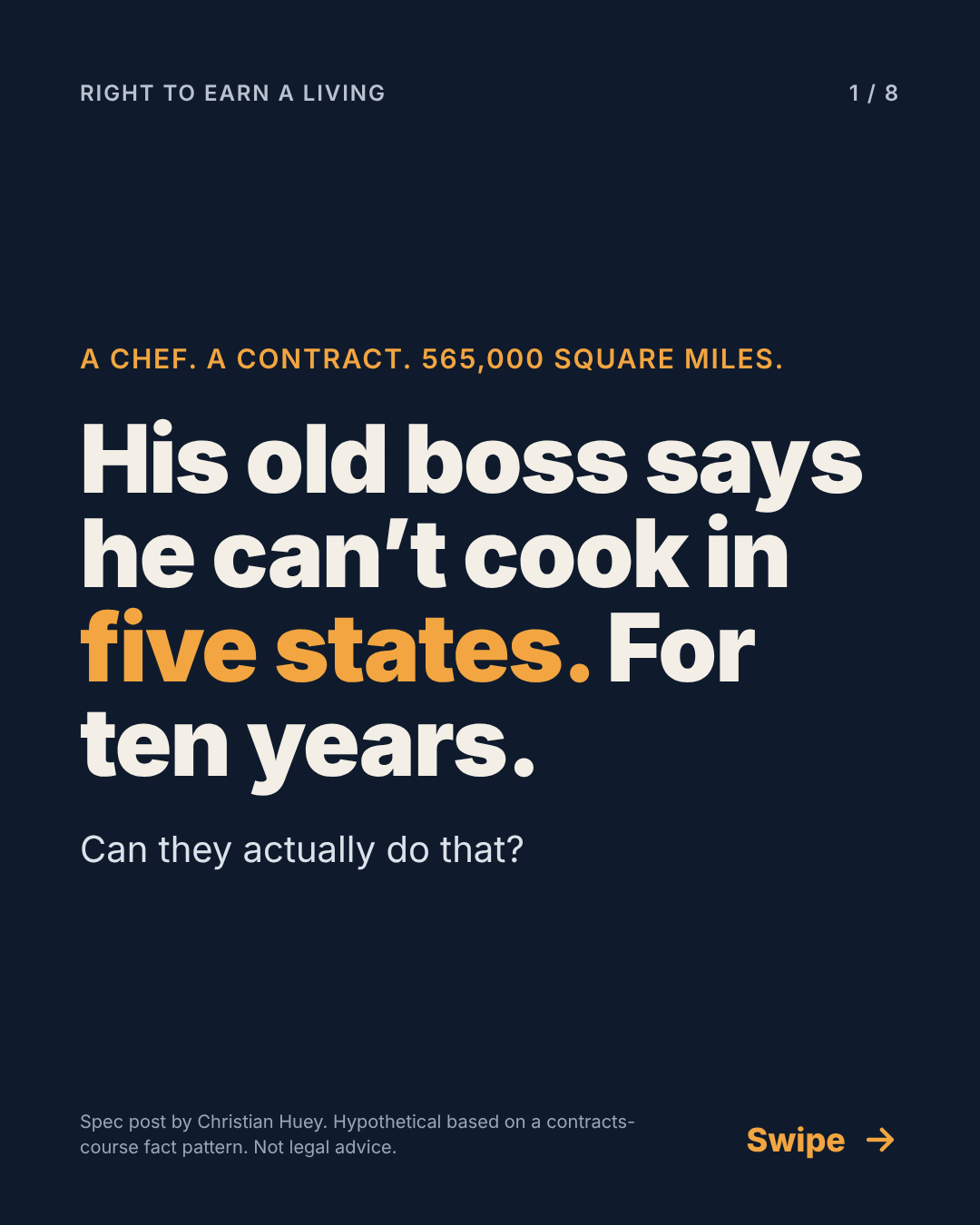
From: my legal memo analyzing a noncompete for a contracts exam (a hypothetical fact pattern). To: an 8-slide carousel, a 60-second video script with a map graphic, and post captions.
Swipe or scroll sideways through the slides.


The 60-second video
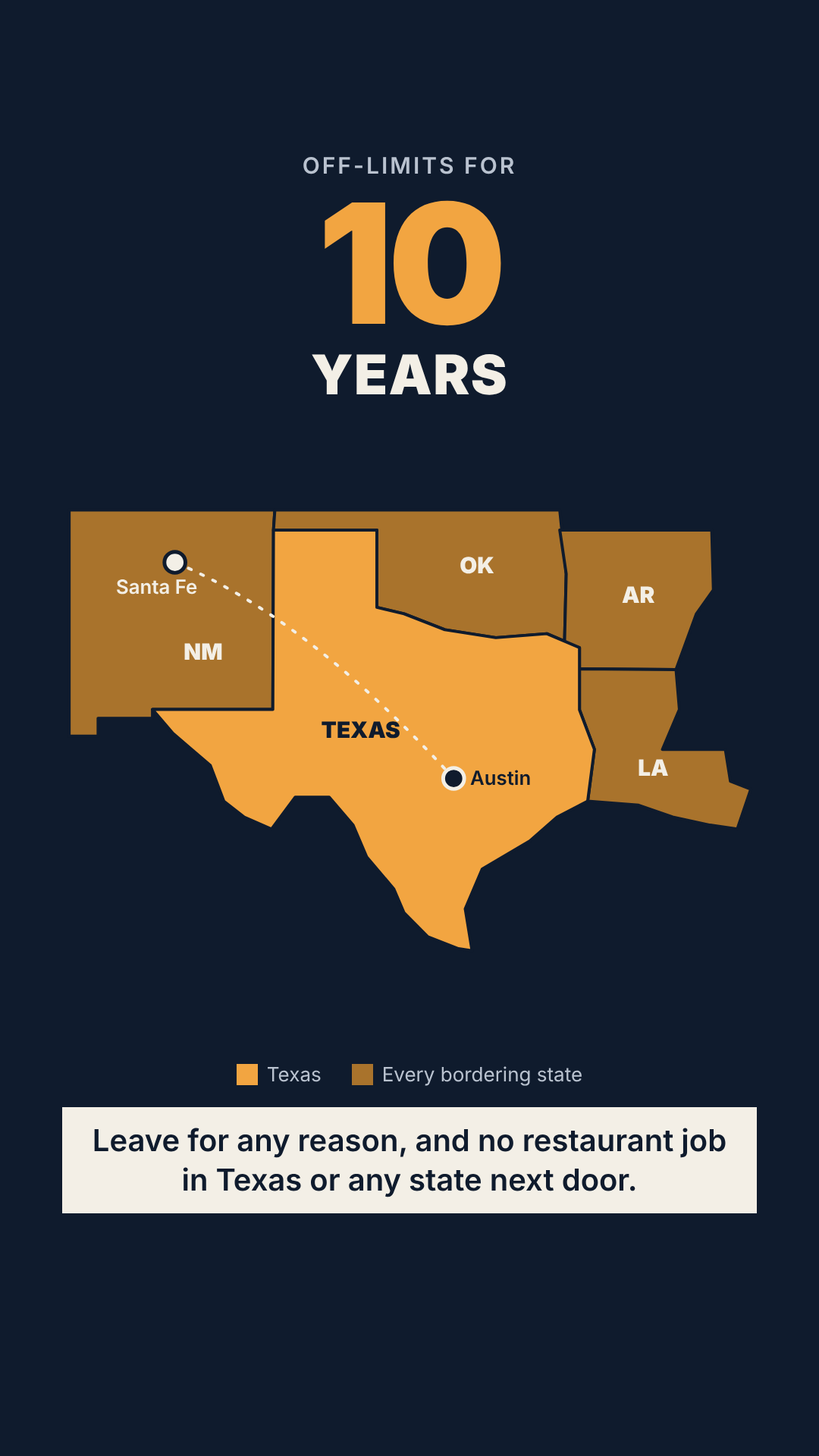
Map graphic for 0:04–0:14. Texas lights up, then each bordering state, then the counter hits 10 years.
| Time | Picture | Voice (on camera) |
|---|---|---|
| 0:00 | Hands plating a dish, pull to me in a kitchen. CAN’T COOK IN 5 STATES? | “Imagine your old boss telling you you can’t cook. Anywhere in five states. For ten years.” |
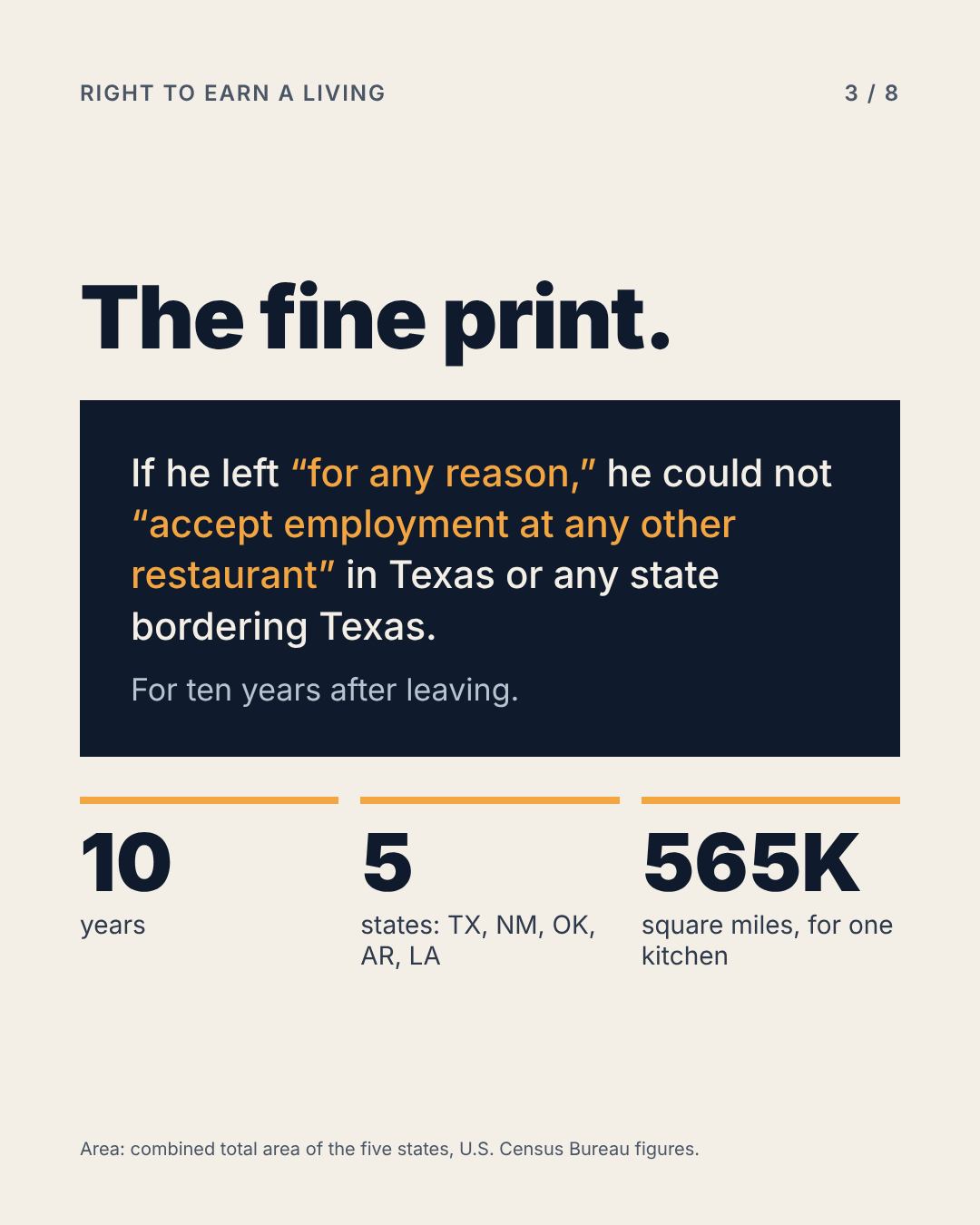
| 0:04 | Map graphic fills state by state. | “That’s the clause a hotel chain put in Randy’s contract when it hired him to run its Austin kitchen. Leave for any reason, and no restaurant job in Texas or any state next door.” |
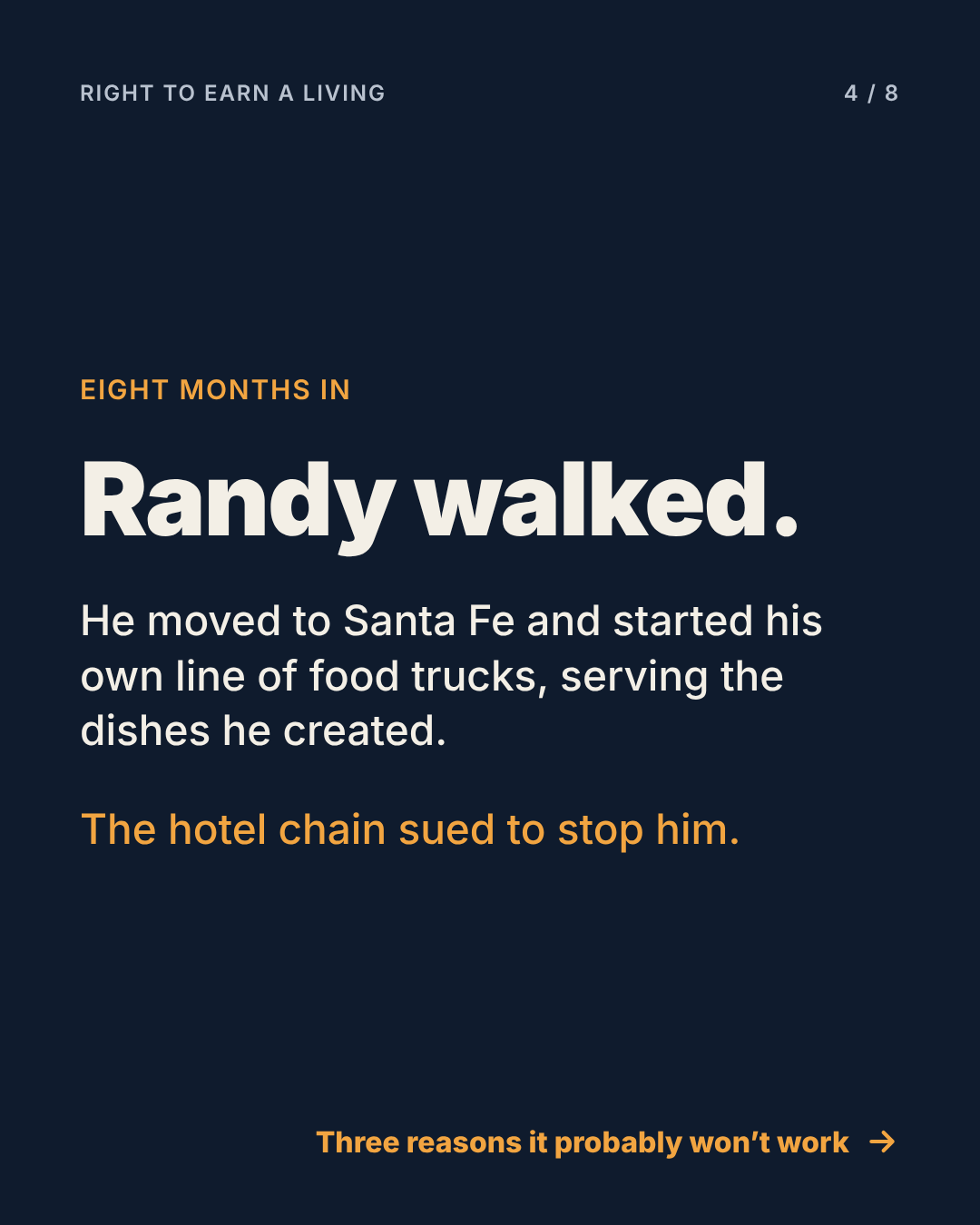
| 0:14 | Food truck B-roll. THE HOTEL SUED. | “Eight months in, he quits, moves to Santa Fe, and opens his own food trucks. The hotel sues.” |
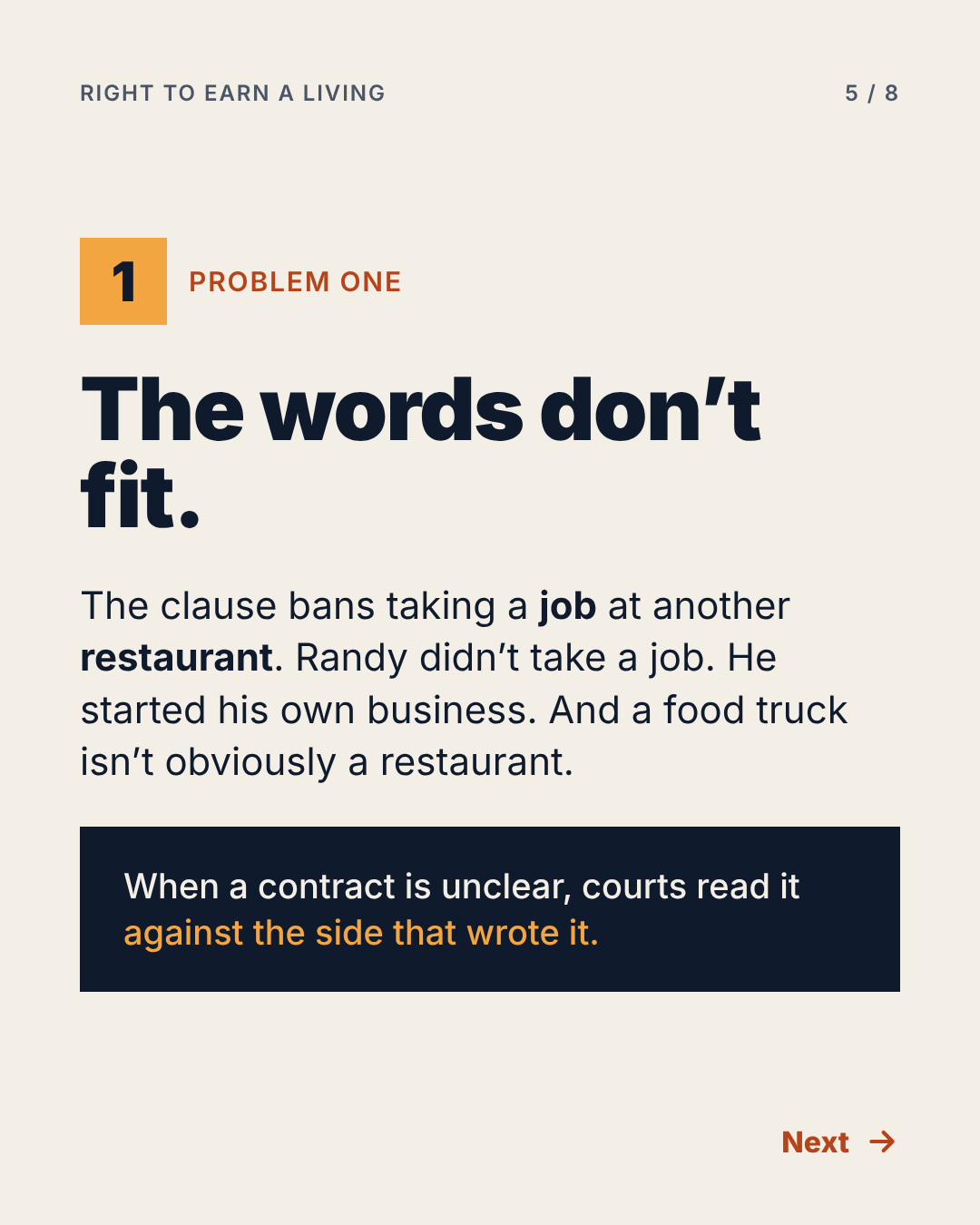
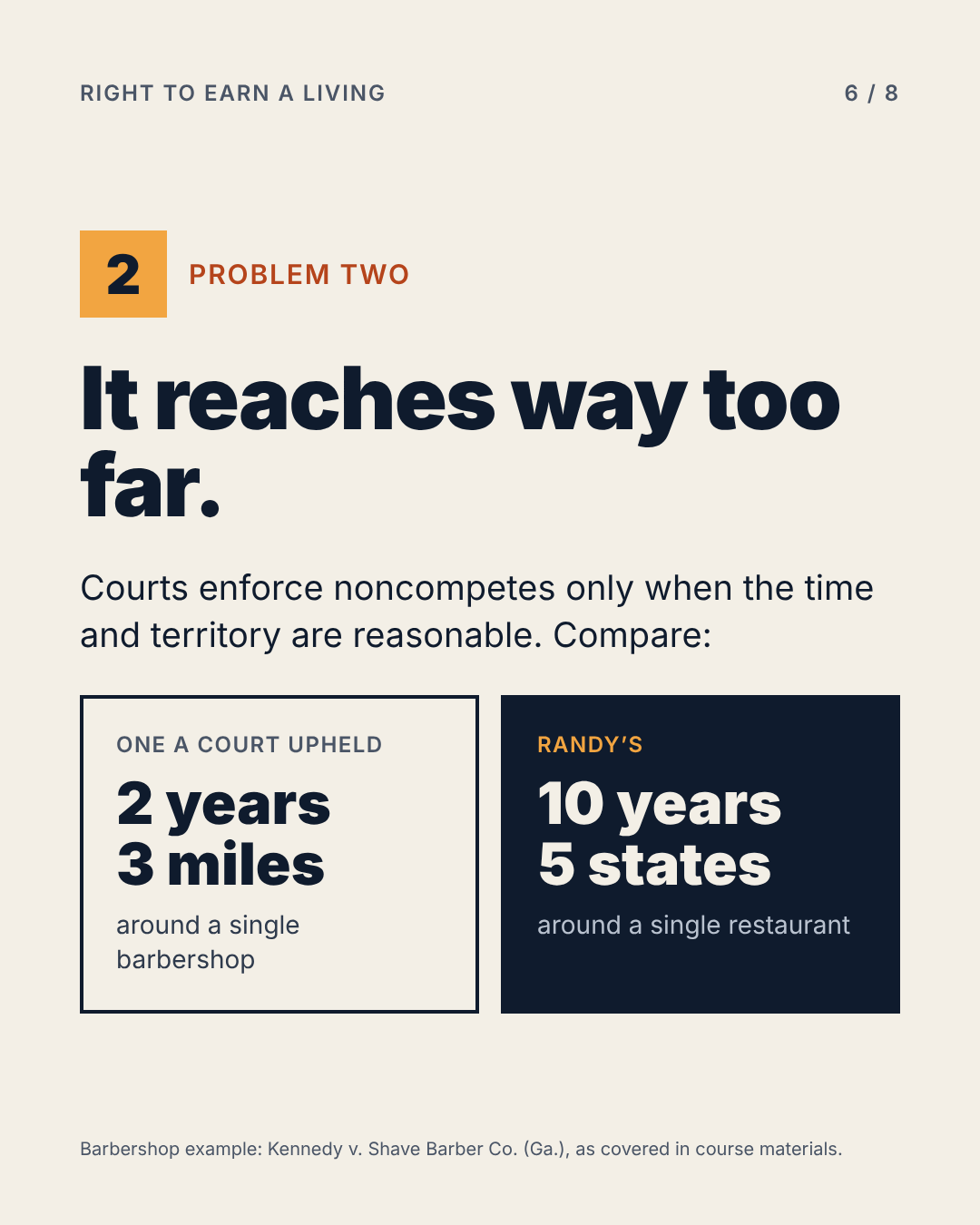
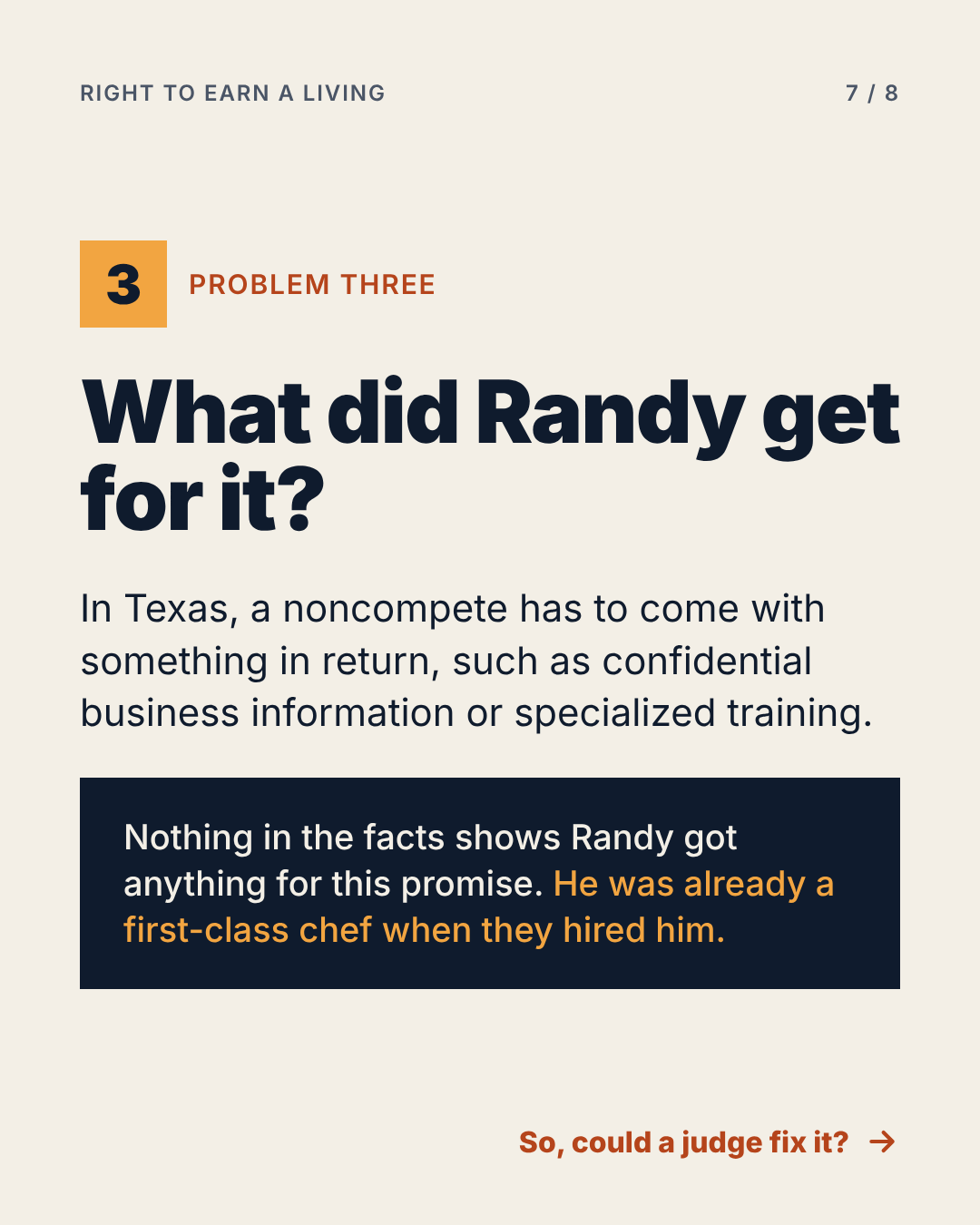
| 0:20 | To camera, numbered supers. | “Here’s why they’d probably lose. One: the clause bans working at another restaurant. Randy’s his own boss, and a truck isn’t obviously a restaurant. Two: ten years across five states is way past reasonable. Three: in Texas, he has to get something for that promise. Did he? Nothing says so.” |
| 0:42 | Split screen, Austin and Santa Fe pins. | “Could a judge rewrite the clause into something reasonable? Maybe. But a fair limit for one Austin kitchen doesn’t reach a food truck in New Mexico.” |
| 0:52 | End card: YOUR SKILLS ARE YOURS. | “A contract can protect a business. It can’t lock you out of your own trade. Follow for more people pushing back.” |
Post copy
X / Threads
A hotel told its head chef he couldn’t work at any restaurant in Texas or the four states around it. For ten years.
He opened food trucks in Santa Fe instead, and the hotel sued.
Why that noncompete probably won’t hold up:
Ten years. Five states. One restaurant job.
That’s the noncompete Randy signed as head chef at an Austin hotel. When he left to start his own food trucks in New Mexico, the hotel sued.
Courts look hard at clauses like this: the wording has to cover what the worker actually did, the limits have to be reasonable, and in Texas the worker has to get something in return. This one has trouble on all three.
Swipe through the breakdown. What would you want to know before signing one?
Set 2: “$25.7 million, gone in two words”
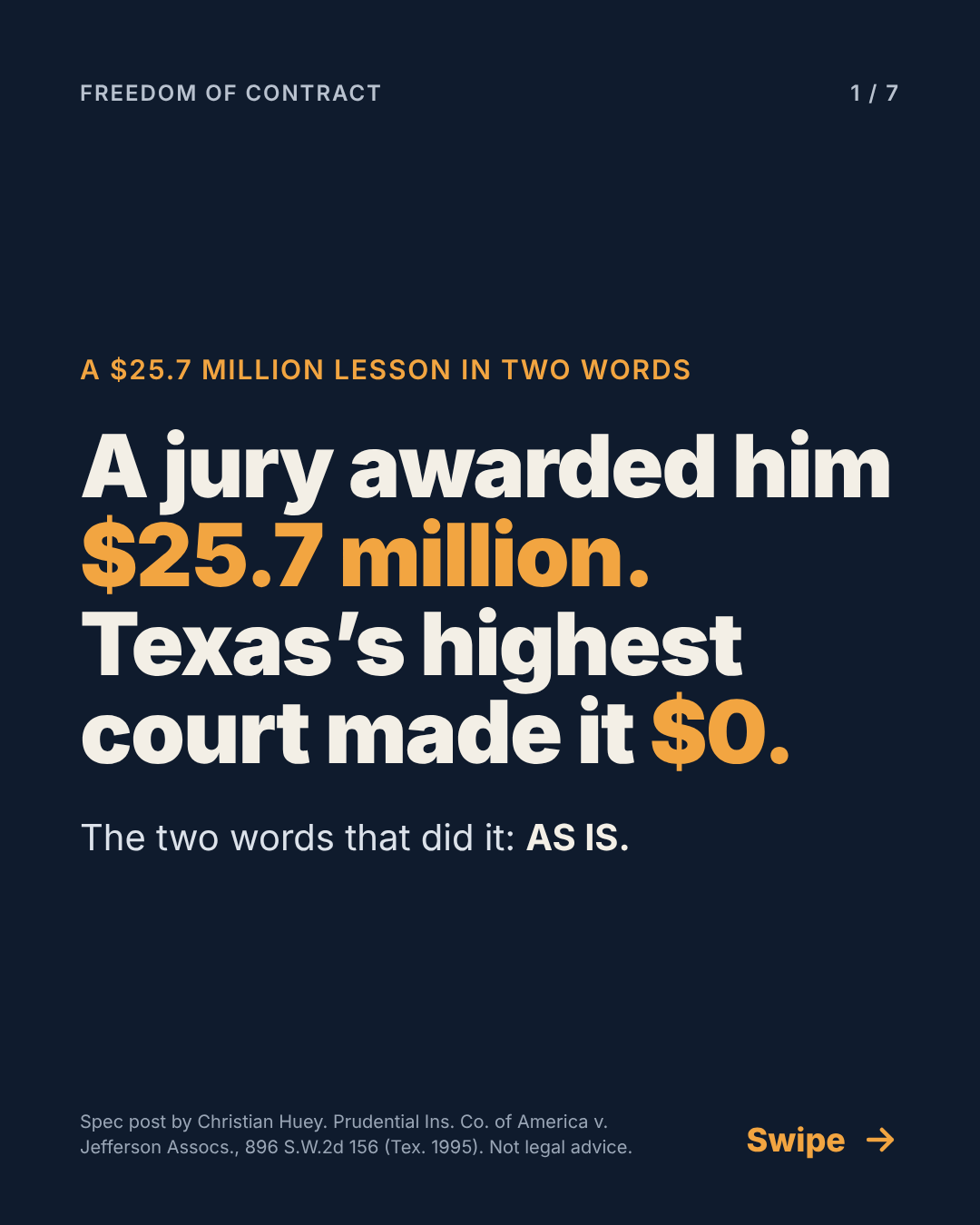
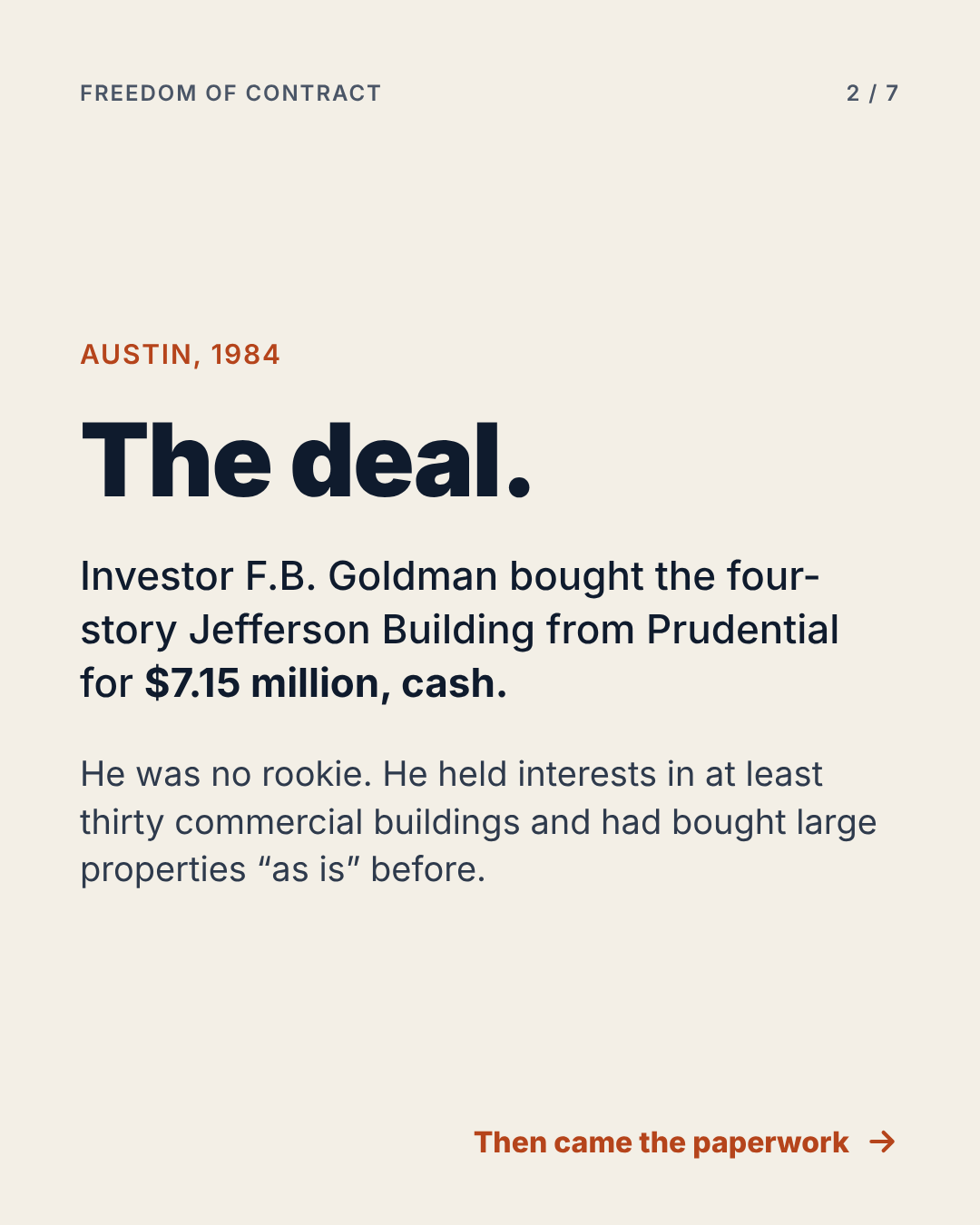
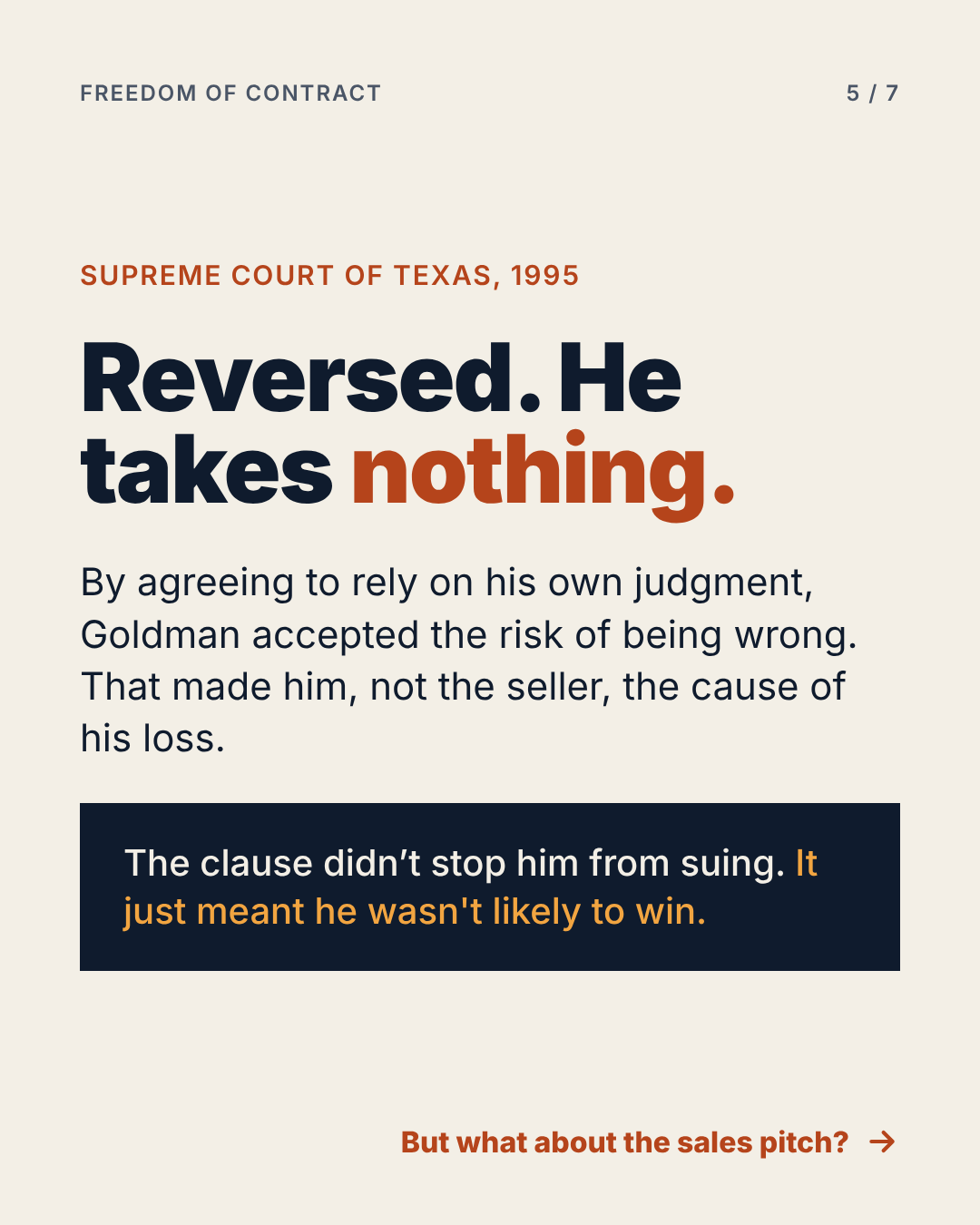
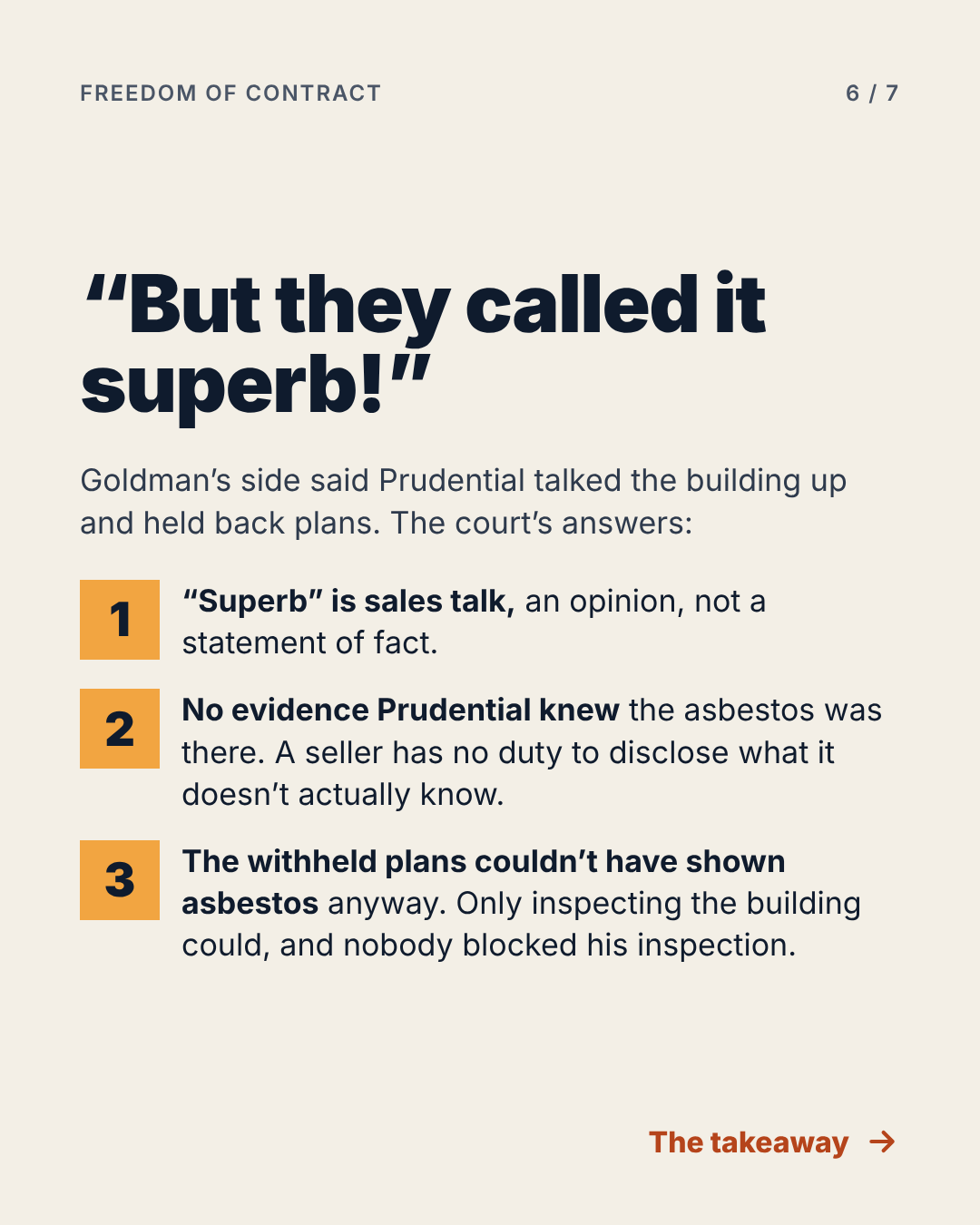
From: my case brief of Prudential Ins. Co. of America v. Jefferson Assocs., 896 S.W.2d 156 (Tex. 1995), a real Texas Supreme Court case about an Austin office building. To: a 7-slide carousel, a 35-second video script and post captions.
Swipe or scroll sideways through the slides.

The 35-second video
| Time | Picture | Voice (on camera) |
|---|---|---|
| 0:00 | On the sidewalk downtown. $25,700,000 → $0 | “A jury gave this investor twenty-five point seven million dollars. Then Texas’s highest court took every cent back.” |
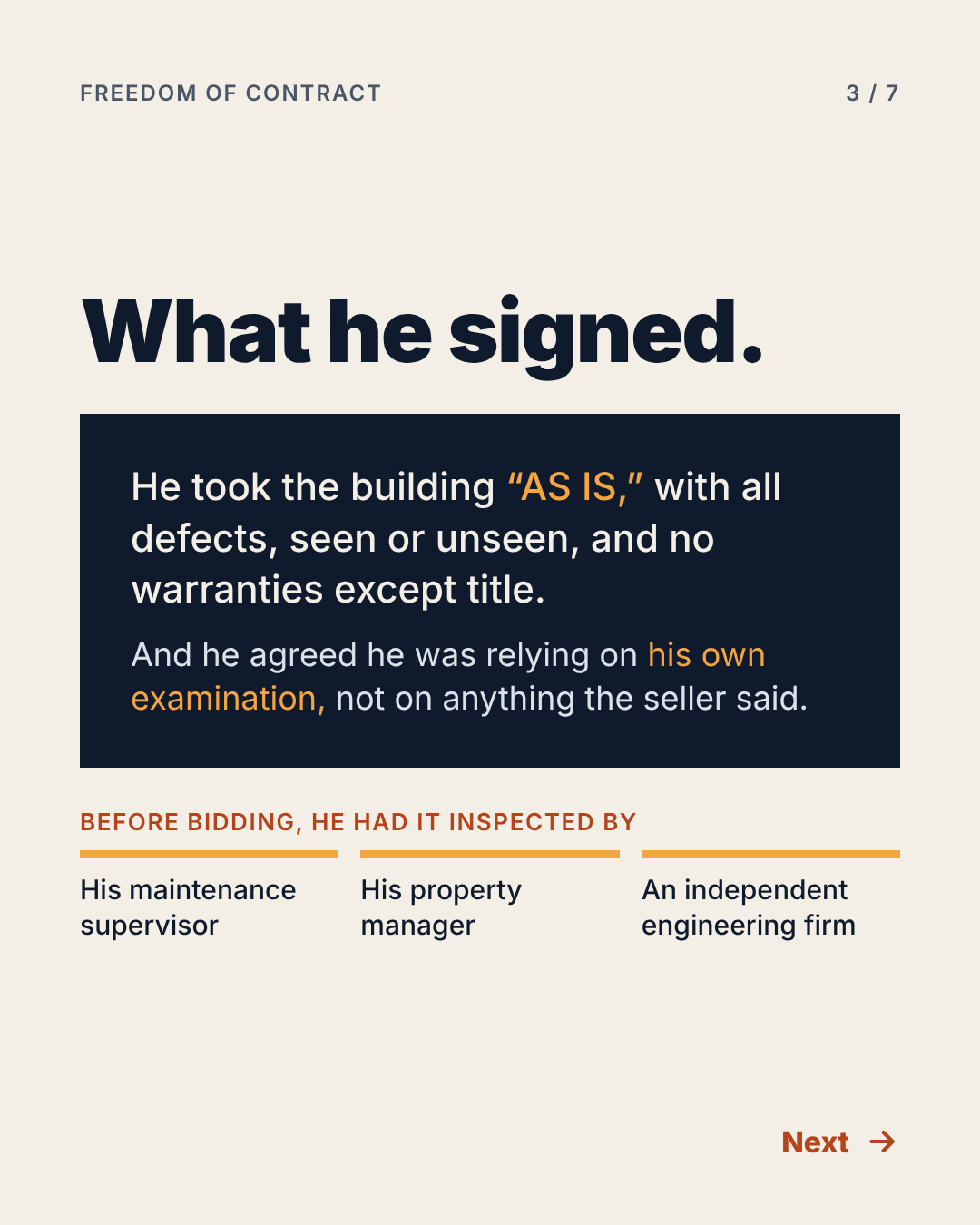
| 0:05 | Tilt up the building. A stamp slams AS IS. | “He bought an Austin office building ‘as is,’ and signed that he was relying on his own inspection, not the seller’s word.” |
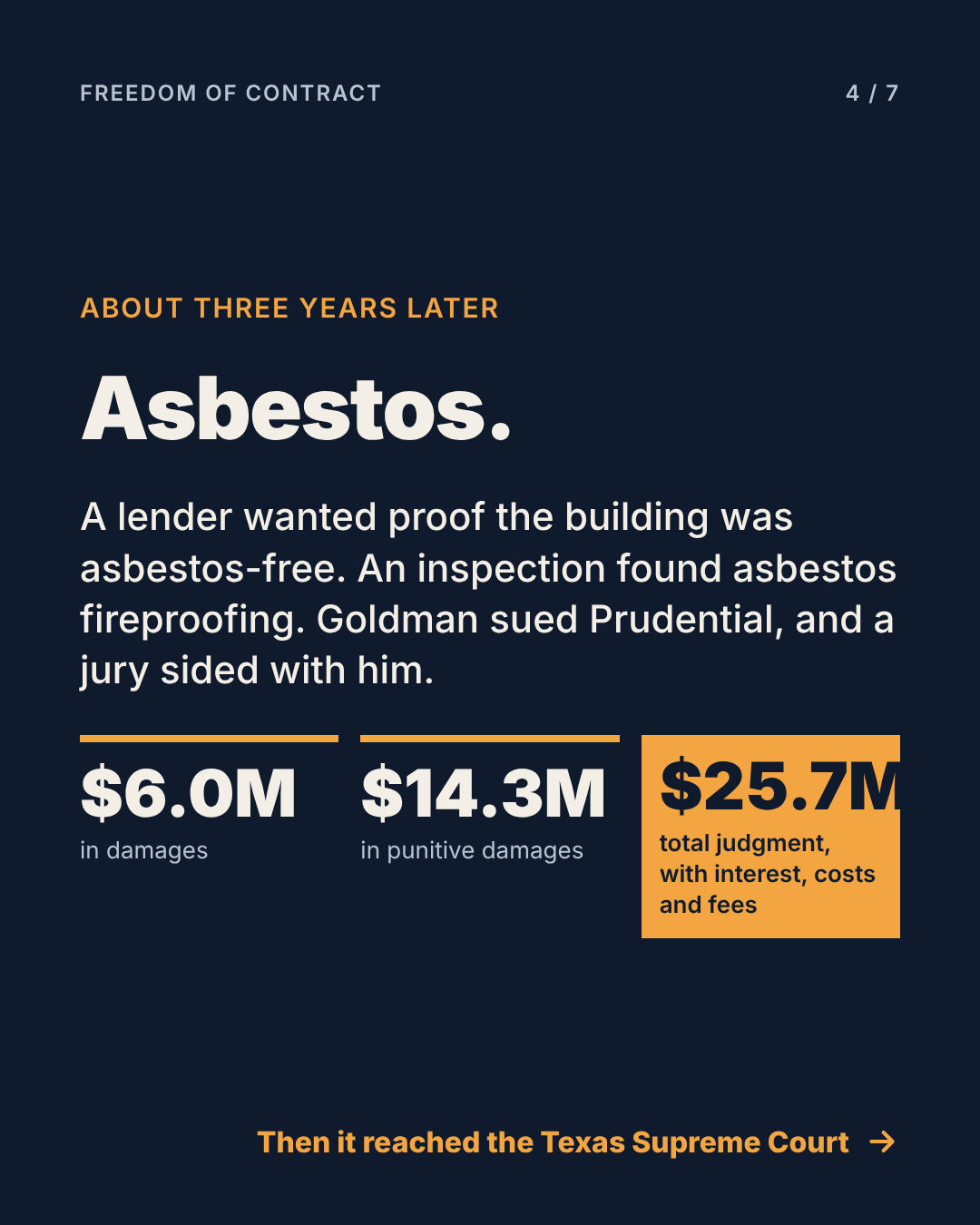
| 0:13 | 3 YEARS LATER, then ASBESTOS. | “Three years later, an inspection found asbestos. He sued, and won big at trial.” |
| 0:20 | Walking toward camera. End card: A DEAL IS A DEAL. | “But the court said a deal is a deal. An experienced buyer who freely takes on a risk doesn’t get to hand it back later, unless he was tricked into it. That’s what freedom of contract means. Follow for more cases that shaped your rights.” |
Post copy
X / Threads
An investor bought an Austin office building “as is” and signed that he was relying on his own inspection. Then he found asbestos and won $25.7M at trial.
The Texas Supreme Court reversed: he takes nothing. Here’s why.
Two words. $25.7 million.
In 1984 an experienced investor bought Austin’s Jefferson Building “as is,” after his own team and an independent engineering firm inspected it. Years later, asbestos turned up, and a jury awarded him $25.7 million.
In 1995 the Texas Supreme Court wiped it out. A buyer who freely agrees to rely on his own judgment owns that risk, unless he was defrauded or kept from inspecting.
Swipe for the full story. Would you sign “as is”?
Not legal advice. Set 1 is based on a hypothetical fact pattern from my contracts coursework.